Articles Decks
Composite or wood? Picking deck boards that fit how you live
8 min read · New Vision Construction
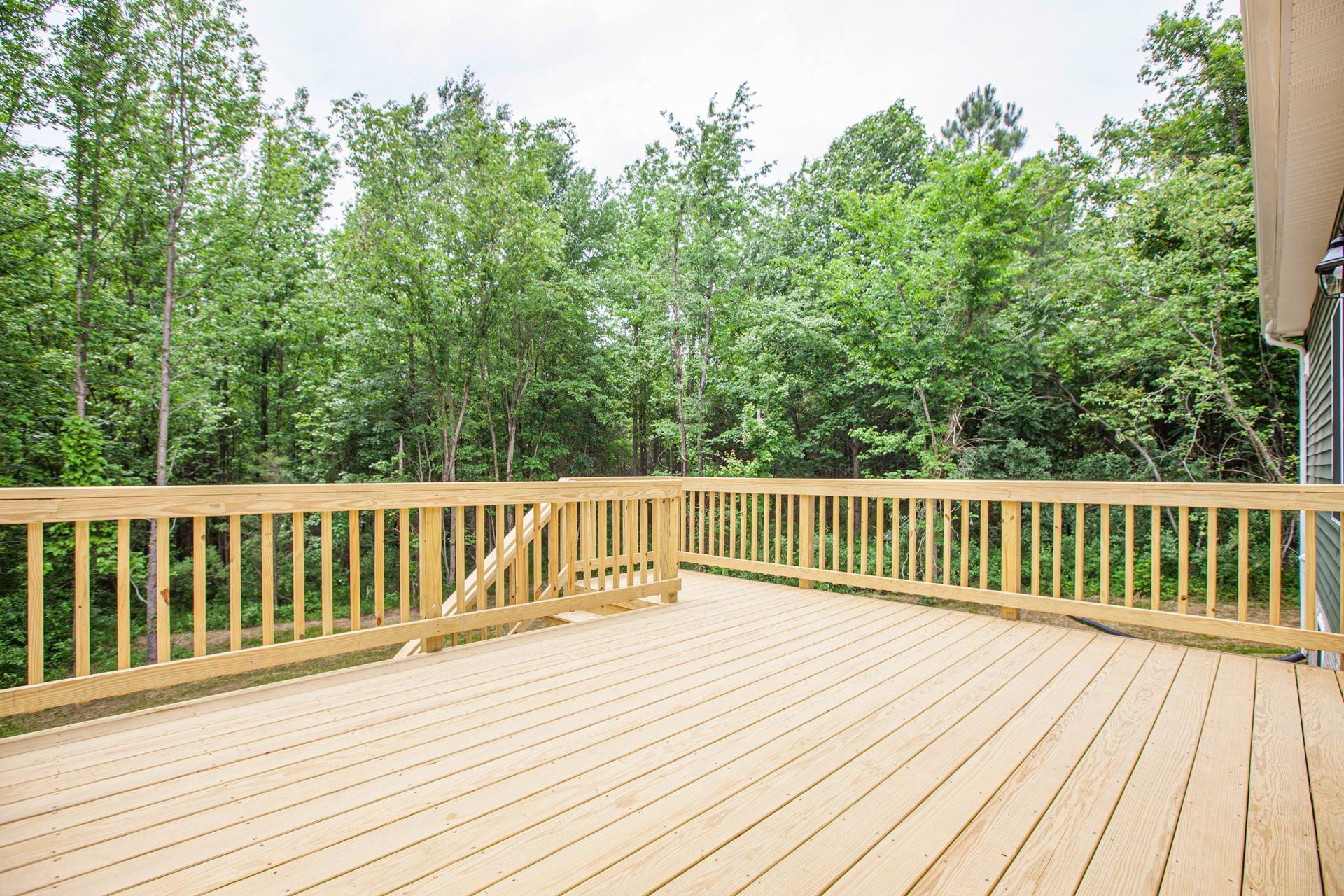
The deck board is the part you see and touch every day, so it is the decision most people spend the most time on. Here is how the common options stack up, what each one asks of you after it is built, and where we usually point people.
Pressure-treated pine
The most common deck board in Virginia. It is pine treated to resist rot and bugs, and it is what almost every deck frame is built from, even when the boards on top are composite.
Pressure-treated pine
Pros
- Lowest cost up front
- Easy to repair or replace a single board
- Can be stained any color once it dries out
- Strong and stiff
Cons
- Checks, splits, and can warp as it weathers
- Needs cleaning and sealing every 1 to 3 years
- Splinters if it is not kept up
- Turns gray if left alone
Cedar
Cedar has natural oils that help it resist rot and insects, and it has a warm color and grain that pine does not.
Cedar
Pros
- Looks great, especially when kept stained
- Lighter and more stable than pine
- Natural rot resistance
Cons
- Softer, so it dents and scratches
- Costs more than pressure-treated
- Still needs regular sealing to keep its color
Composite
Composite boards are made from wood fiber and plastic with a protective outer shell. Most of the decks we build for people who plan to stay in their home are composite.
Composite
Pros
- No staining or sealing, ever
- Will not splinter, rot, or check
- Color stays consistent board to board
- Long manufacturer warranties, often 25 years or more
- Hidden fasteners give a clean surface
Cons
- Higher cost up front
- Dark colors get hot in full sun
- Can scratch under heavy furniture or grills
- Cannot be refinished, so pick a color you like
PVC
PVC boards have no wood in them at all. They are the top of the line for moisture and stains.
PVC
Pros
- Best choice around pools and hot tubs
- Lightest and most stain resistant
- Stays cooler than many composites
Cons
- Highest cost
- Expands and contracts more with temperature
- Can feel less like wood underfoot
Railings
Railings change the look of a deck more than most people expect. Wood rail matches a wood deck and is the most budget-friendly. Vinyl rail stays bright white with almost no upkeep. Aluminum and cable rail are slimmer and keep the view open, which matters on a raised deck with a view.
What sits under the boards
No matter what you walk on, the frame is pressure-treated lumber on footings, built to code and inspected. On composite decks we protect the tops of the joists so water does not sit on the wood under the boards. That frame is what decides how long the deck lasts.
How we would choose
- Staying in the house 10 years or more: composite. It pays for itself in skipped maintenance.
- Selling soon or watching the budget: pressure-treated with a good stain.
- Hot tub or pool: PVC or a high-end capped composite.
- You love real wood and do not mind upkeep: cedar.
Have a question about your own project? Ask us for a quote, and we will walk you through the options in person.